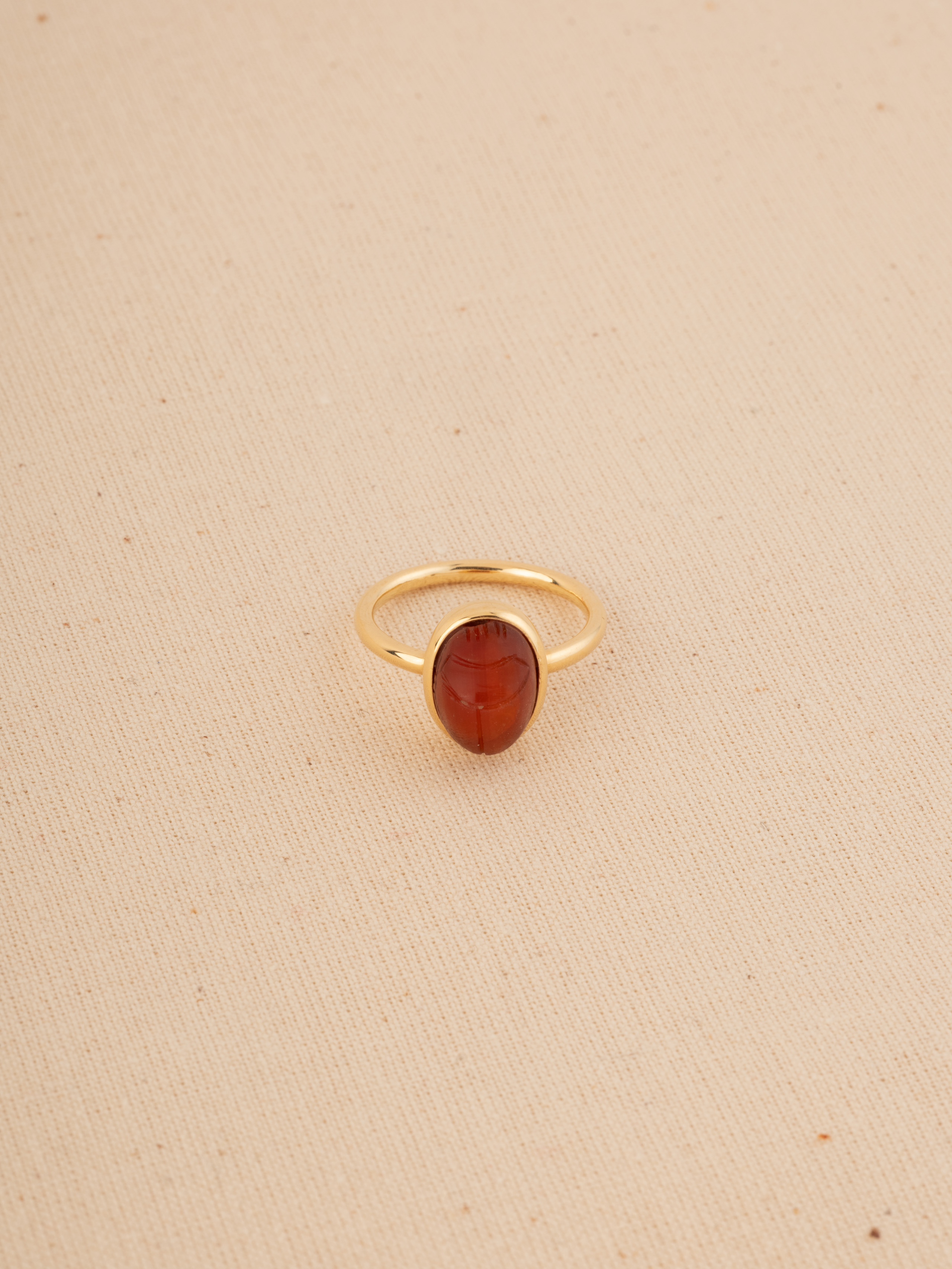
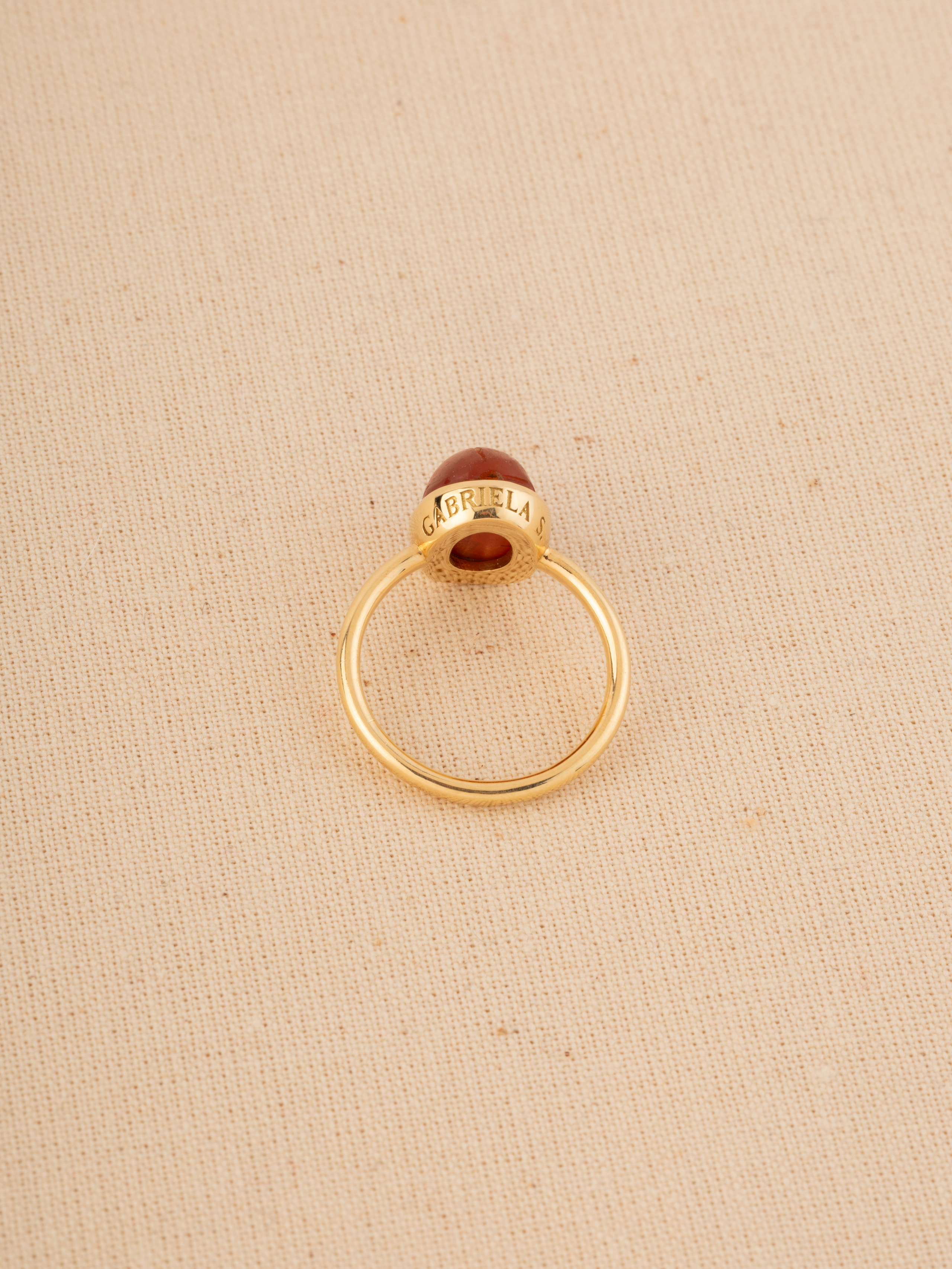
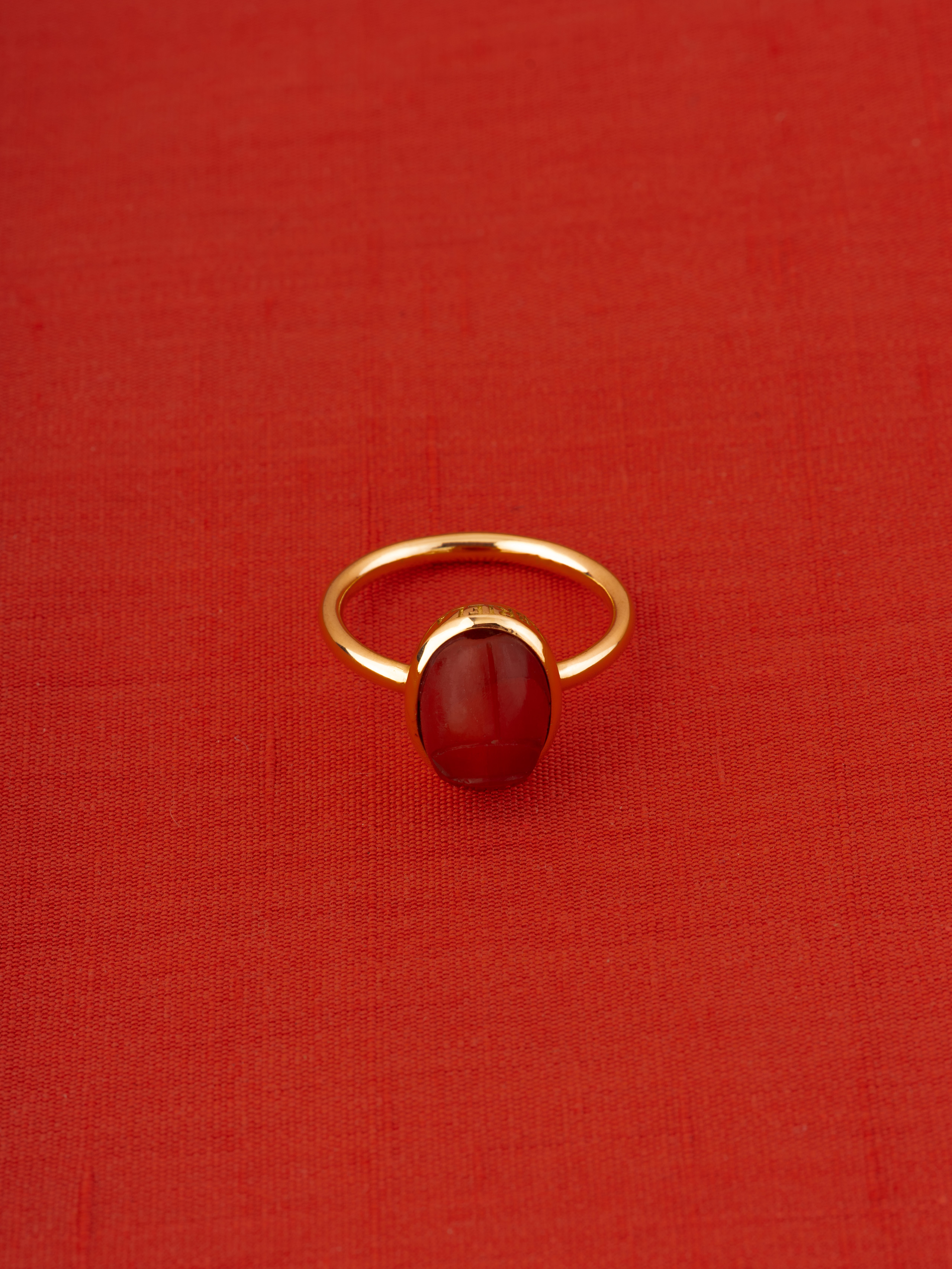
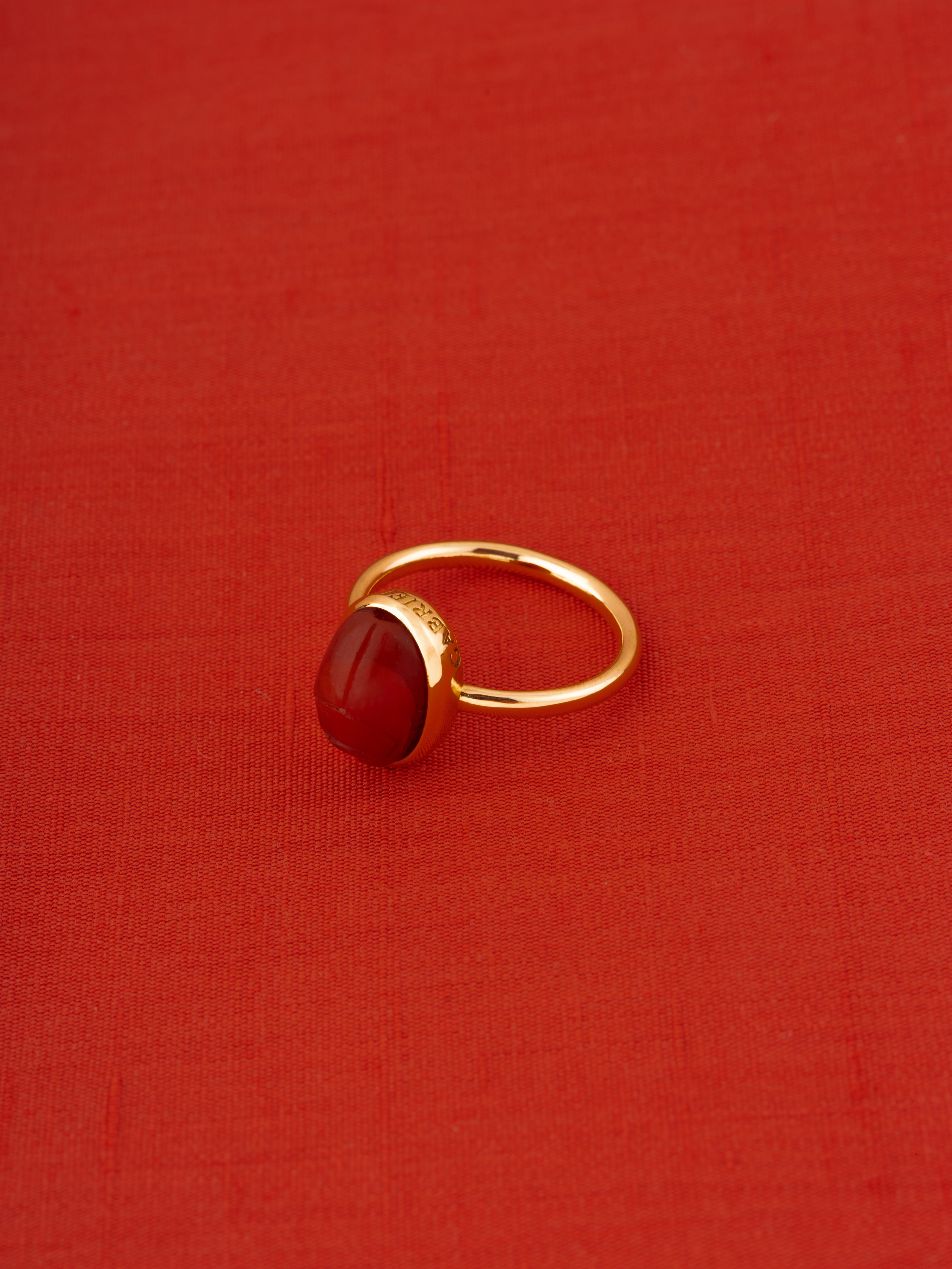
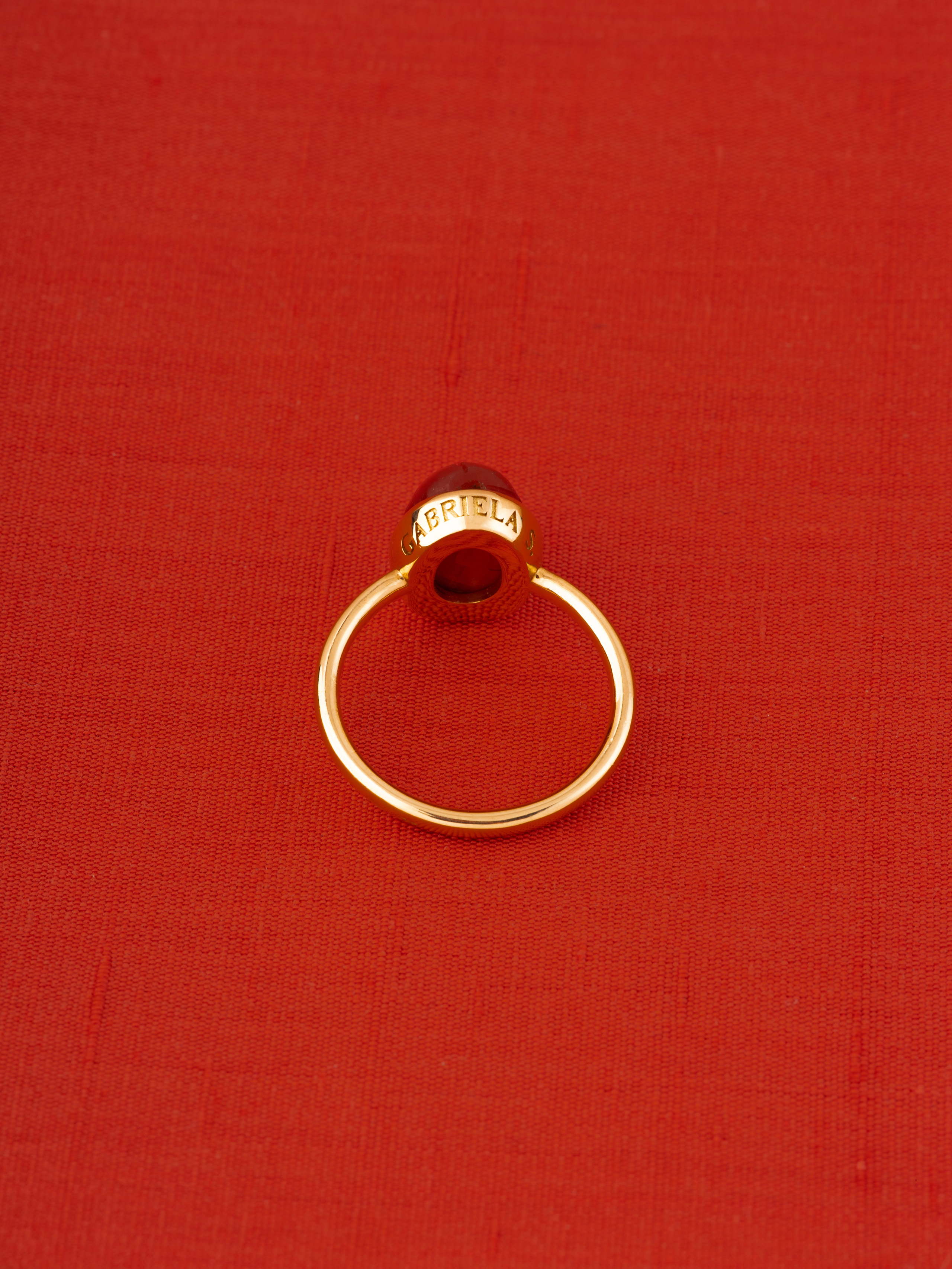


Ramsès
Cornaline
Circa 1550–1070 BC, Egypt.
18-carat gold setting and ring.
Price
7500€
History
An Egyptian dynastic carnelian scarab, this ring preserves the memory of one of the most important amulets of ancient Egypt.
In hieroglyphic writing, the scarab — Kheper — refers to ideas of existence, manifestation, development, growth and efficacy. This symbolic charge explains why, throughout every period of Egyptian history, it became one of the favoured forms of the amulet.
A symbol of resurrection and fertility, the scarab held a dual function. It protected, through its religious and apotropaic powers; it also affirmed the identity, property and authority of the individual whose name could be inscribed on its underside. In life, it acted as seal and signature. In the afterlife, it carried the promise of eternal rebirth.
Heart scarabs, placed upon the chest of mummies, held a particular place. For the Egyptians, the heart was not only the centre of life: it also bore thought, memory and moral values. At the Last Judgement, it was to be weighed against Ma’at, the principle of order and truth.
Associated with the solar god Khepri, imagined in the form of a scarab pushing the sun across the sky, this insect became the sign of the star’s daily rebirth, but also of the permanence of the human soul.
What once belonged to the realm of amulet, seal and rite now rests upon the hand.
Ramsès is a Protection Jewel.
Reassurance
Independent authentication
Transformation by a specialised atelier
Unique piece
Transformation by a specialised atelier
Unique piece