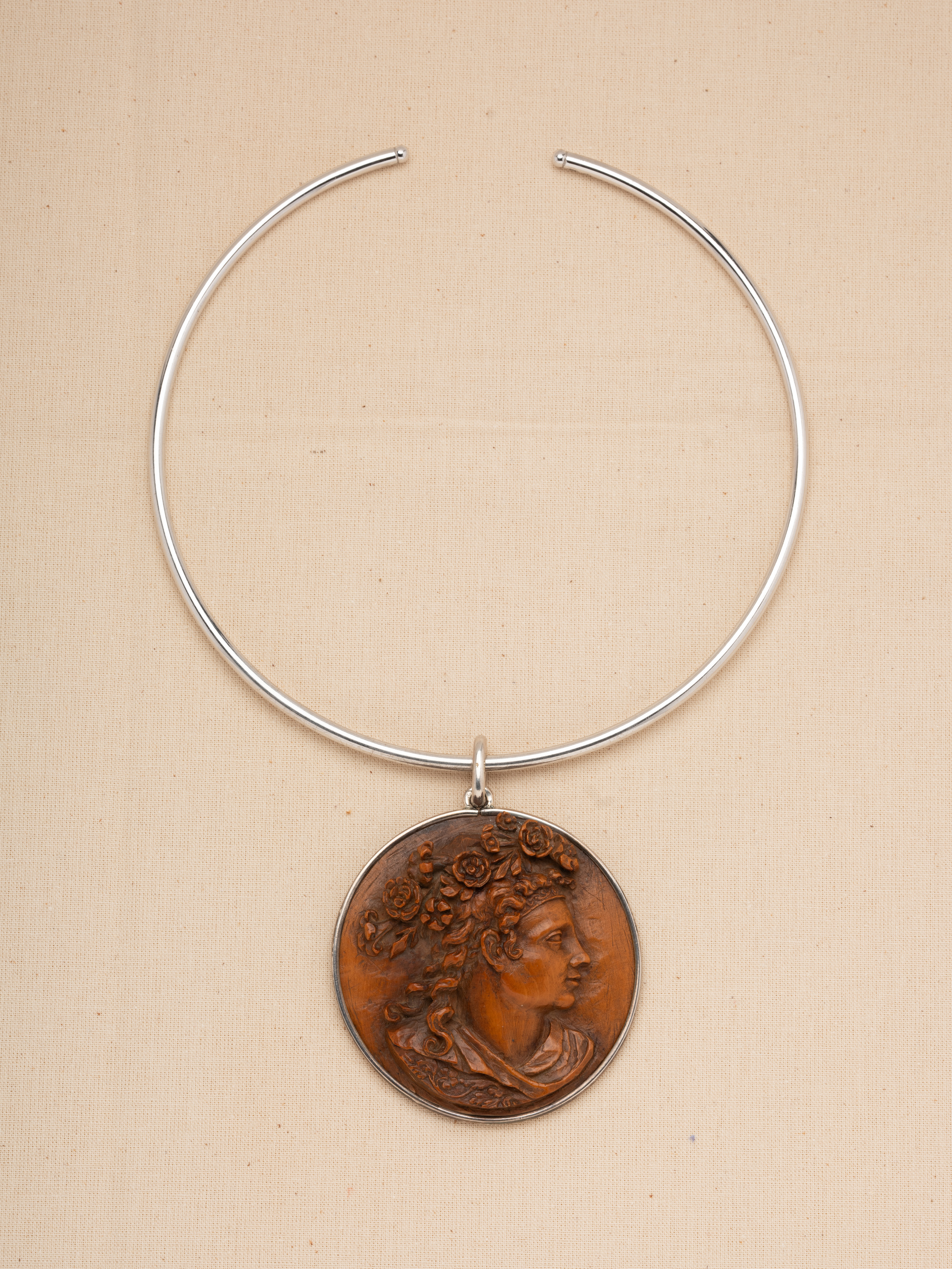
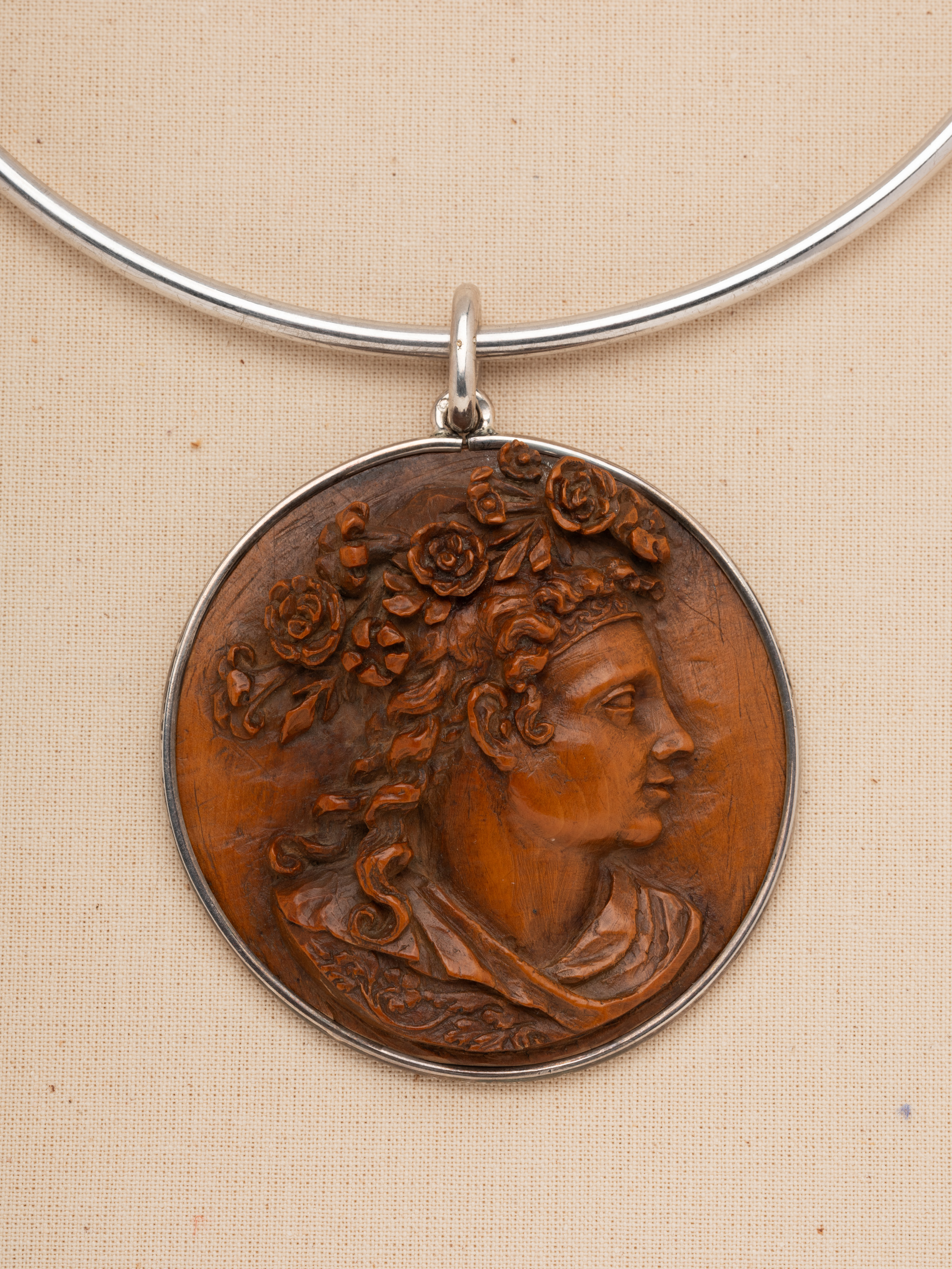
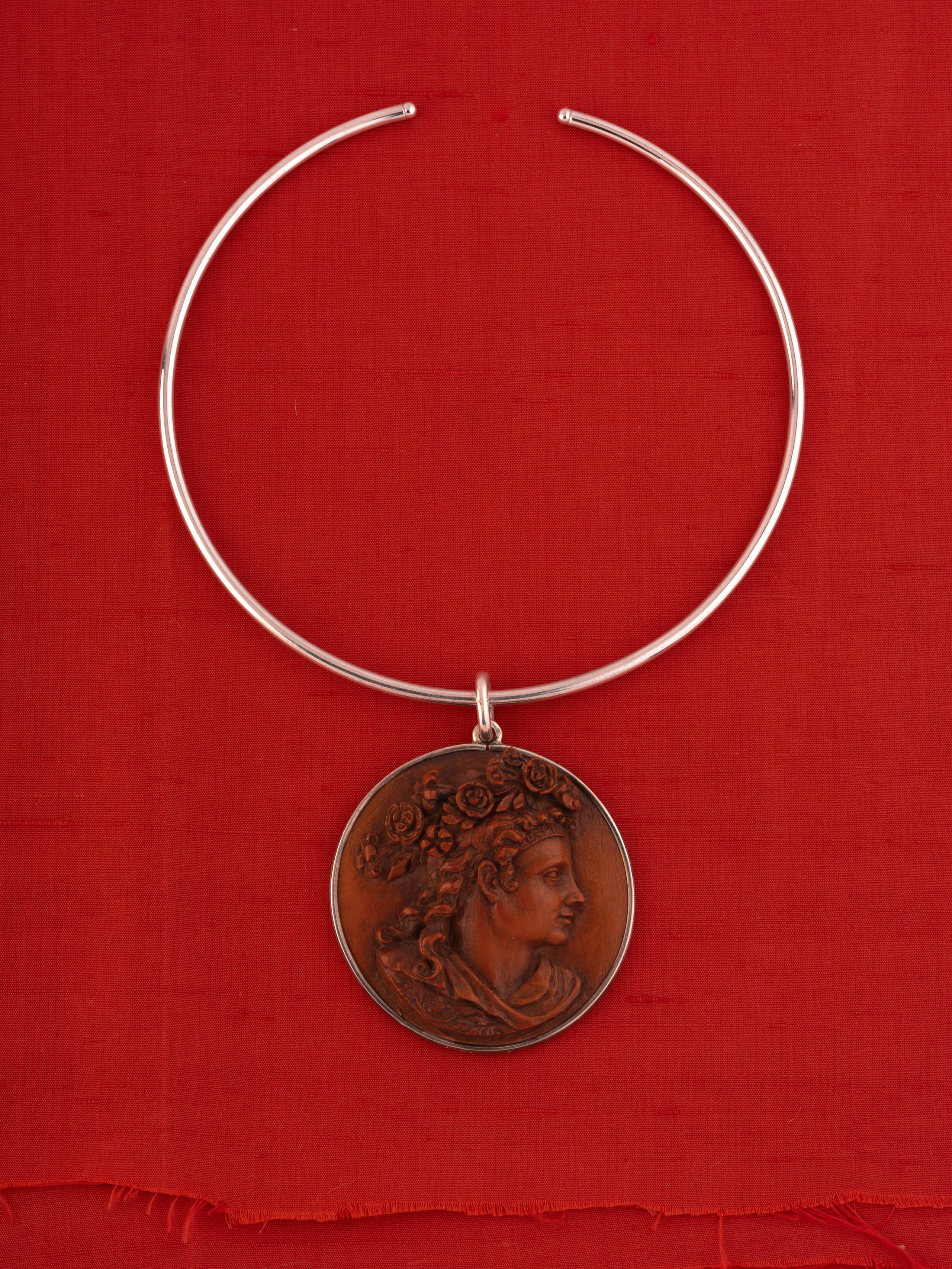
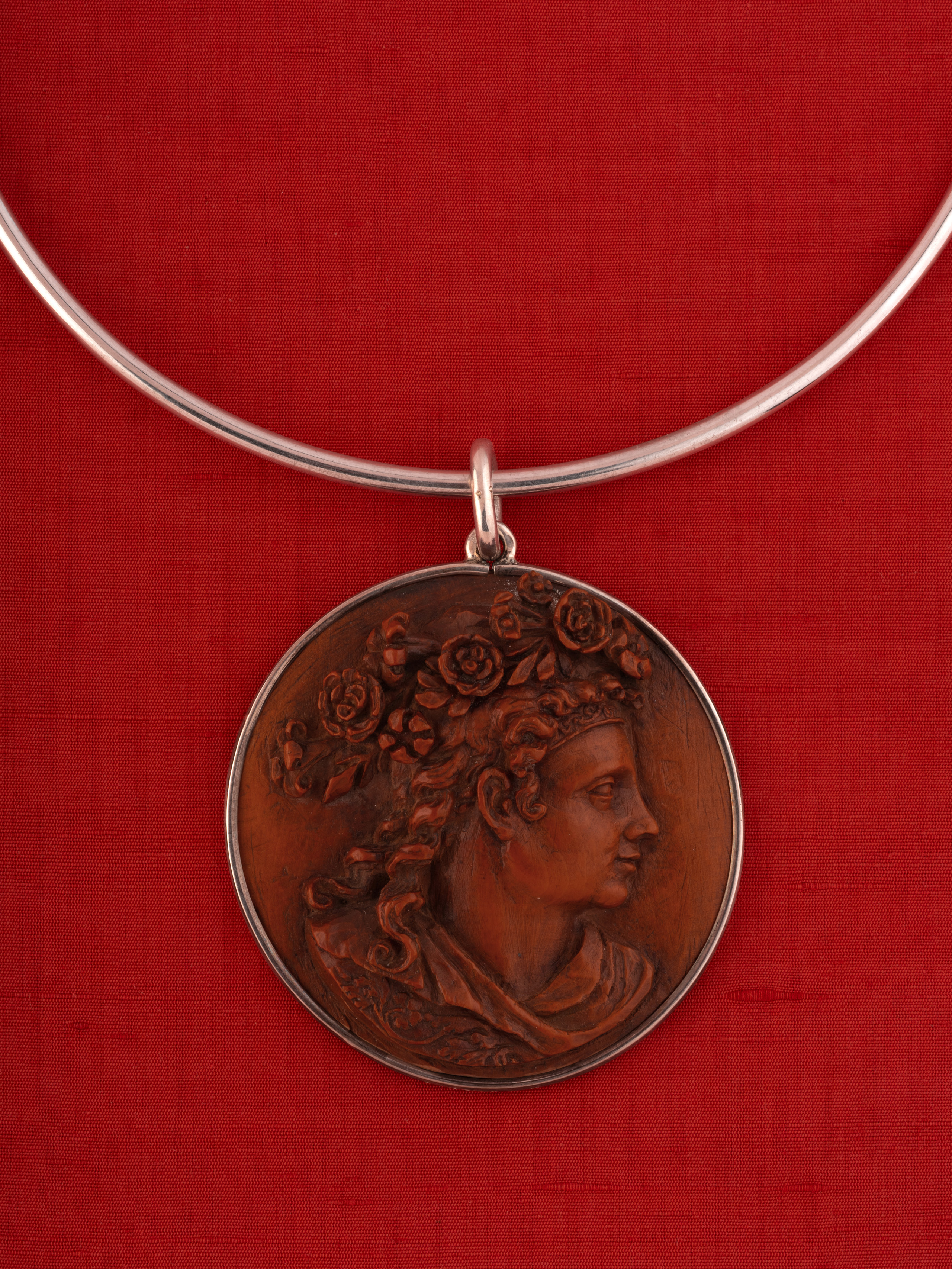
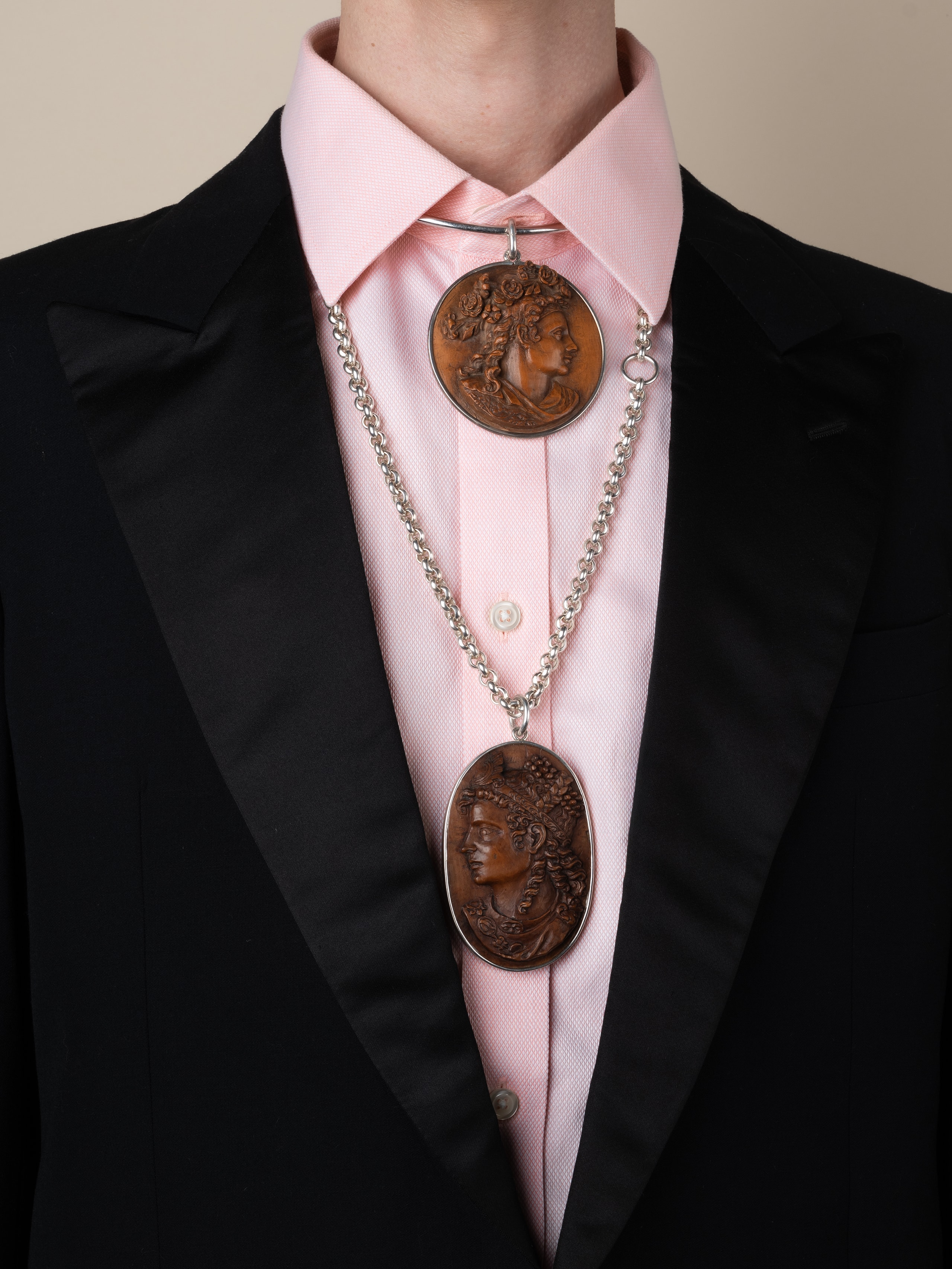
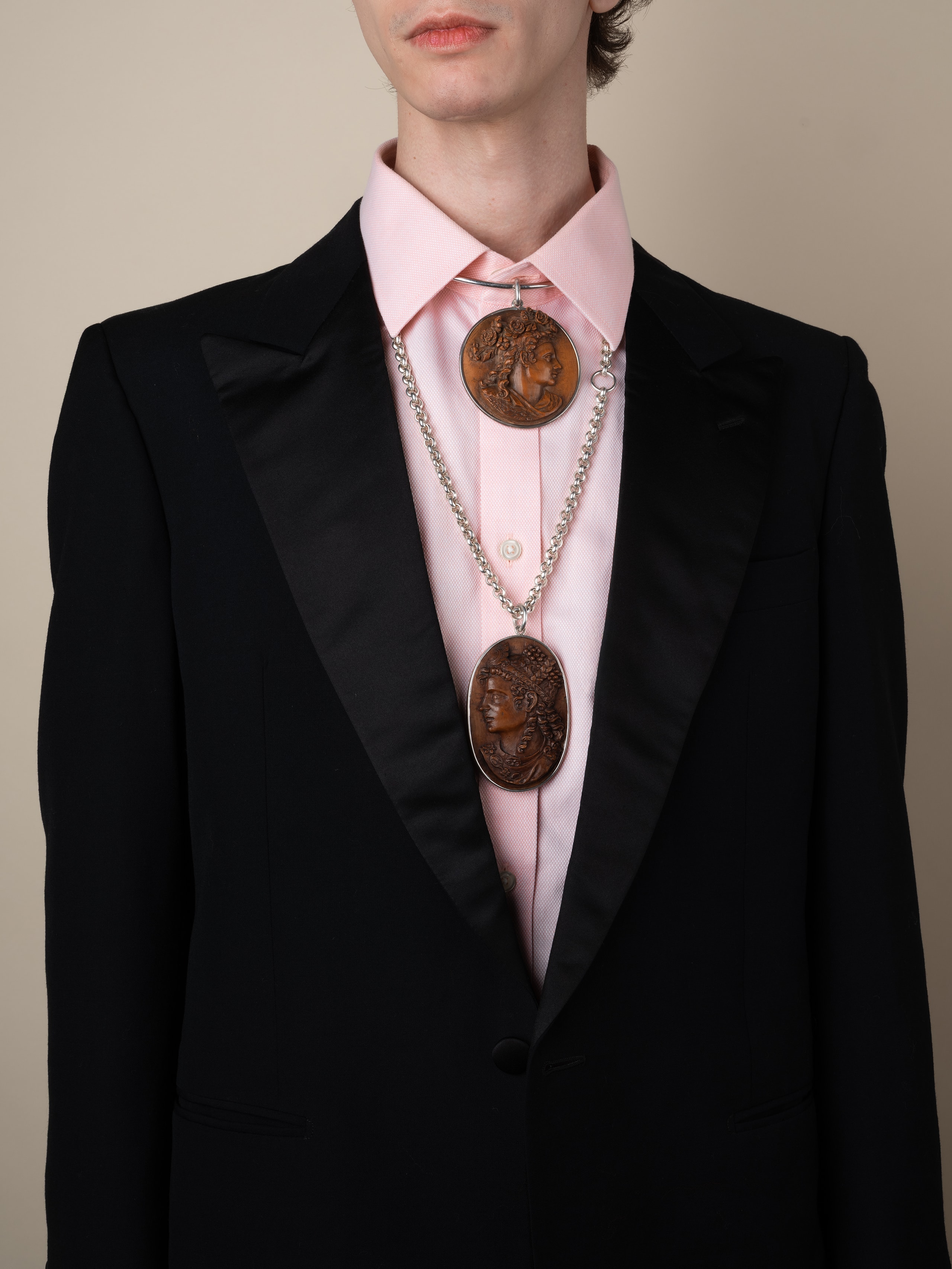
Flora
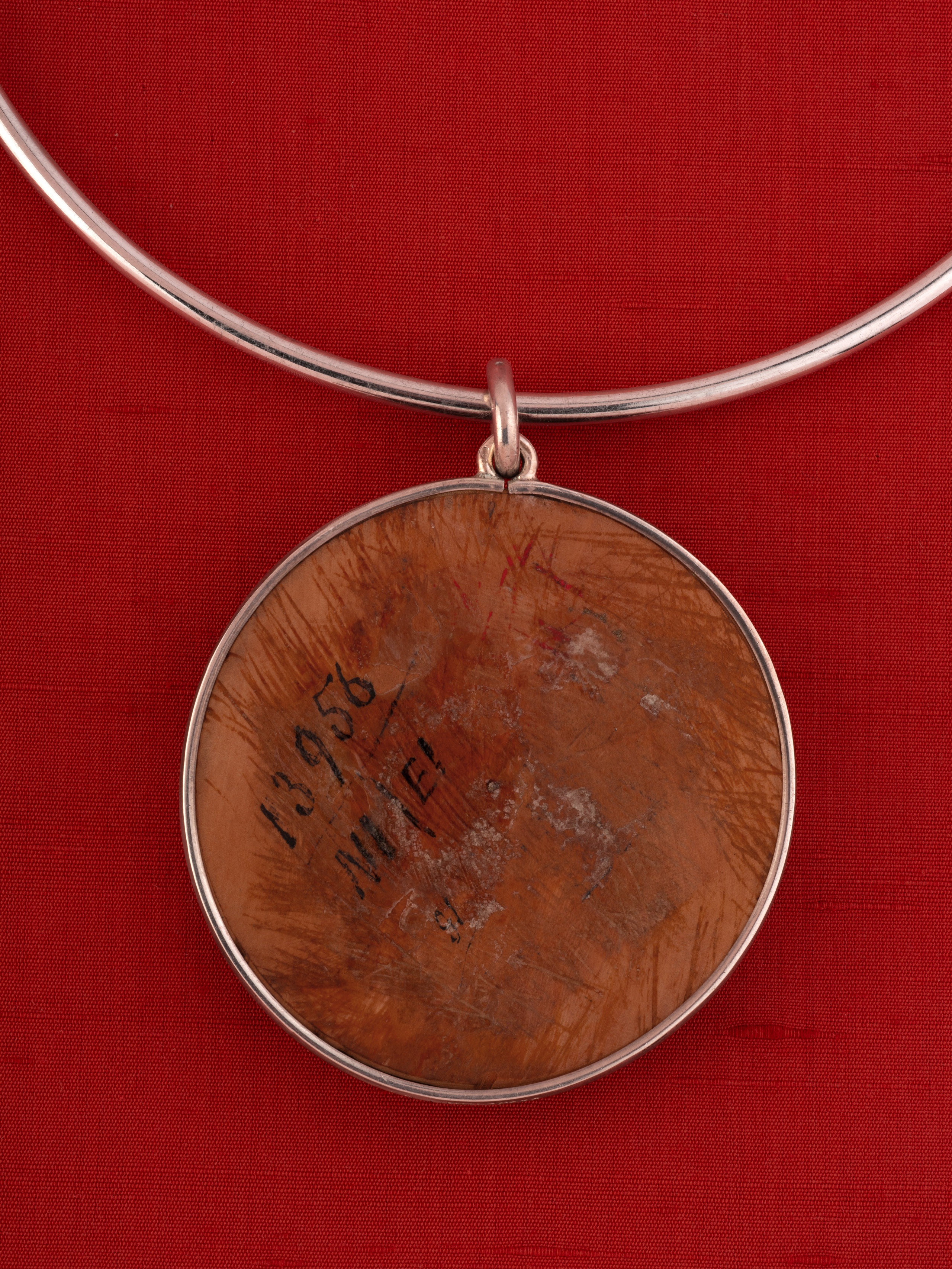
Buis
Cira 1600, Germany.
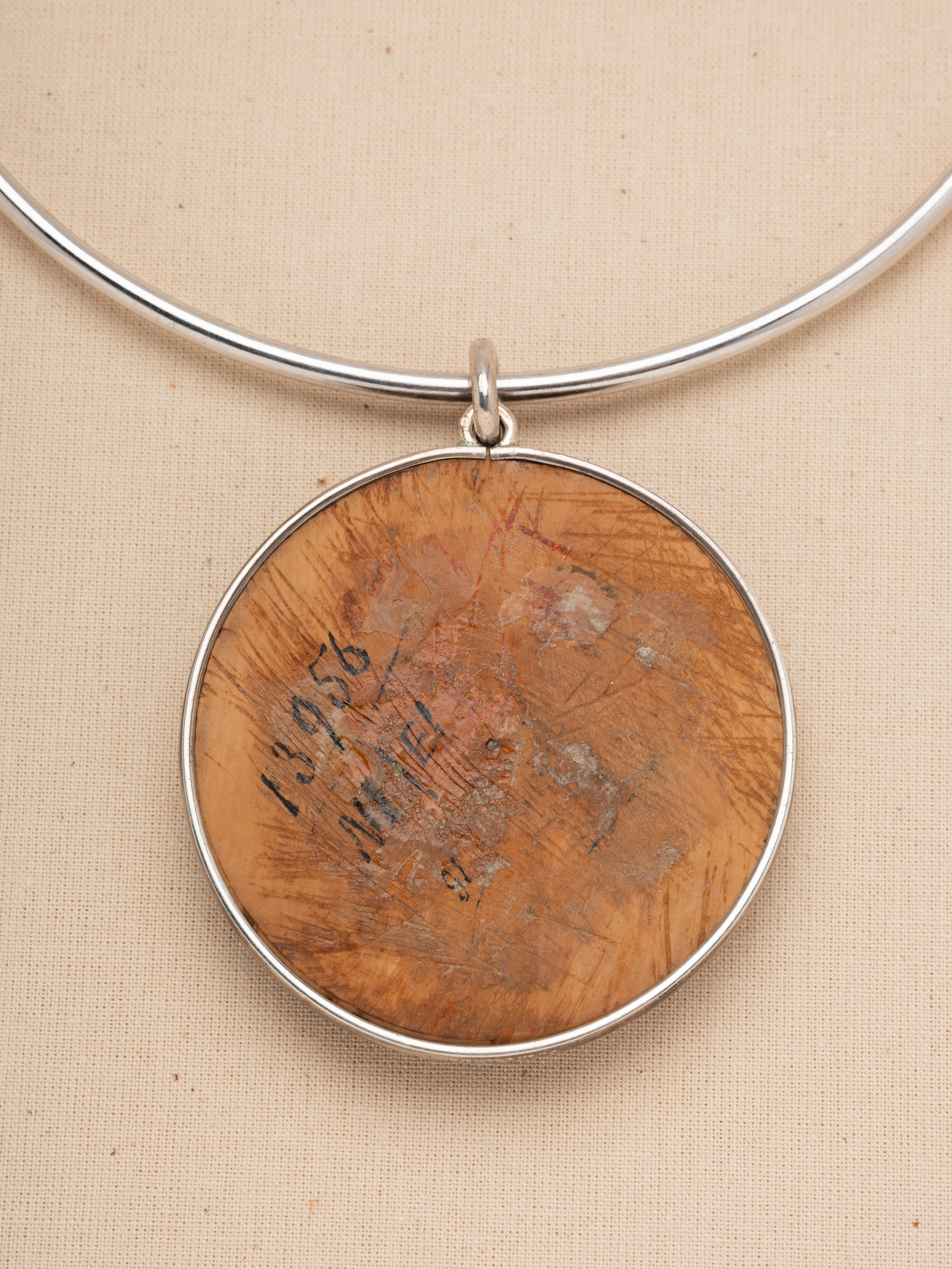
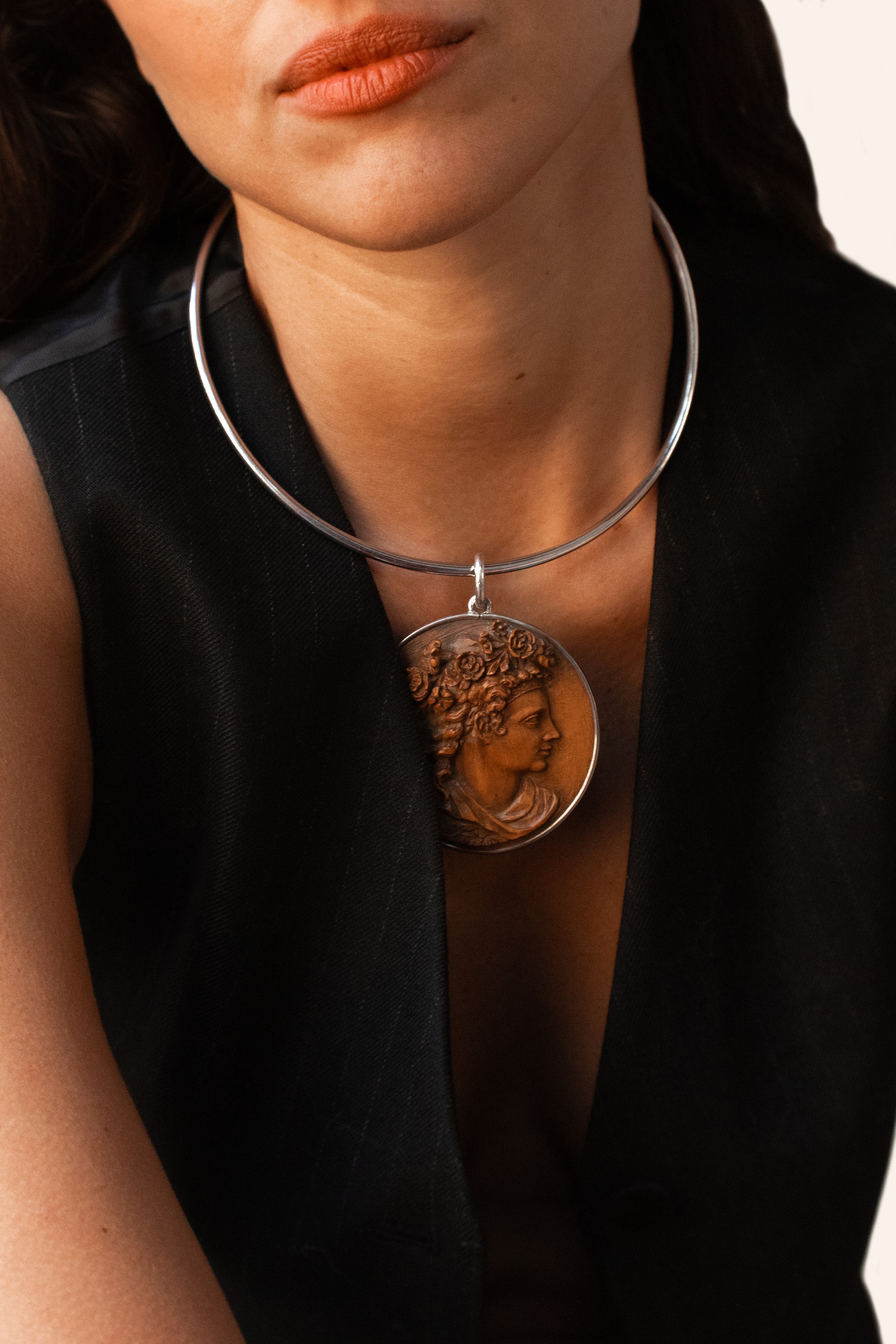
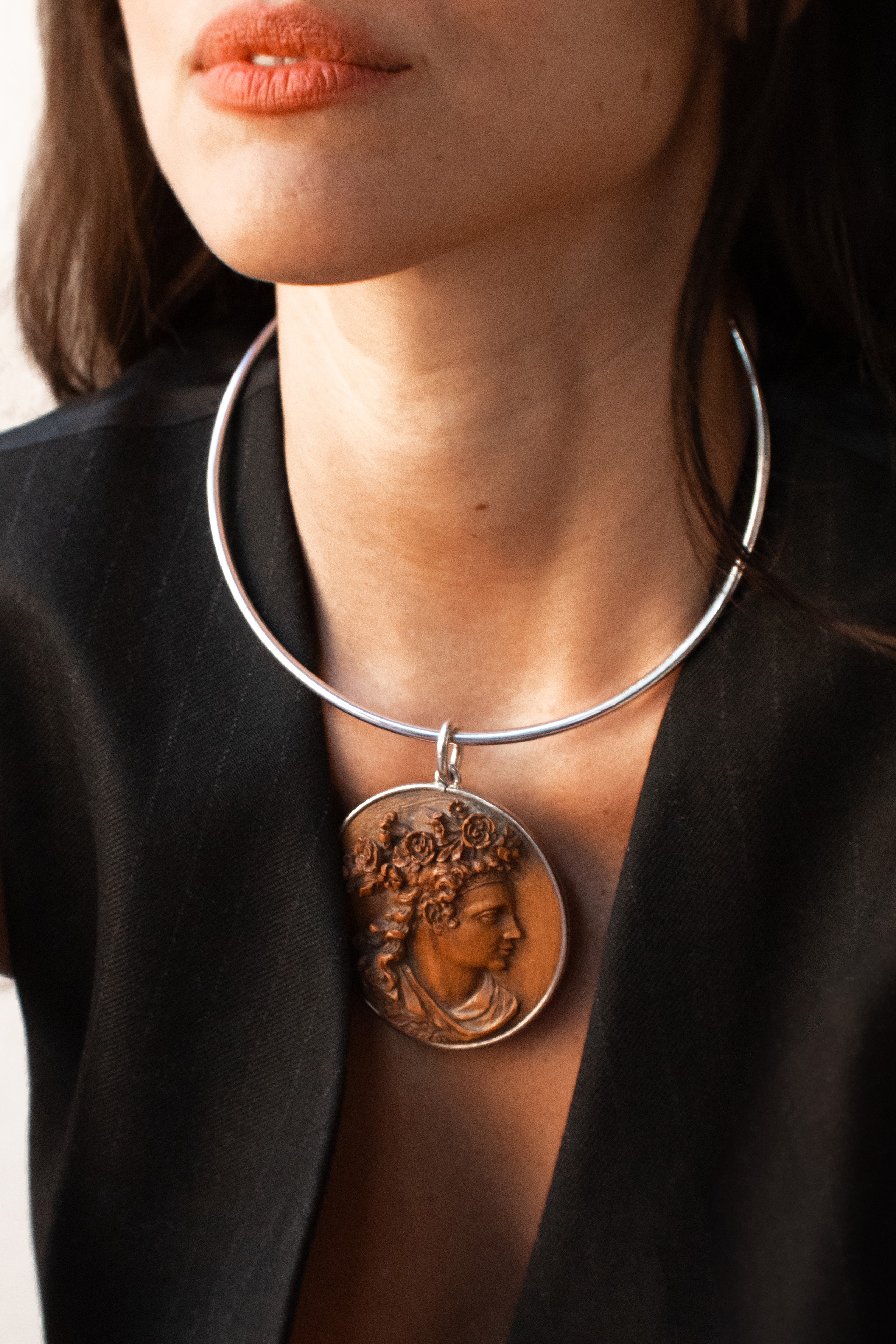
Silver bezel and bail, mounted on a supple silver torque.
Price
15000€
History
A rare Renaissance medallion depicting the allegory of Spring, possibly associated with Flora, this necklace belongs to the great tradition of the portrait medal, born in Antiquity and reimagined by humanist Europe.
During the Renaissance, this genre experienced a true revival, driven by the emergence of a new secular individualism and by a renewed interest in classical civilisations. In Italy, the earliest Renaissance medals were cast in bronze, lead, pewter, silver or gold, using the lost-wax technique. In Germany, sculptors appear to have favoured models carved in wood and stone.
Within the vast Habsburg Empire, the art of the medal became especially prized in the sixteenth century. It was distinguished by portraits of exacting verism, but also by the close relationship between artists and their patrons. For certain sculptors, executing a medal in honour of a patron thus became an opportunity to assert their own renown.
Inspired by ancient cameos and intaglios, they vied in technical mastery and invention, particularly in the rare medallion portraits carved in boxwood, of which very few examples have survived the centuries.
What once belonged to the realm of the humanist portrait now rests upon the body.
Flora is an Elevation Jewel .
Reassurance
Independent authentication
Transformation by a specialised atelier
Unique piece
Transformation by a specialised atelier
Unique piece