
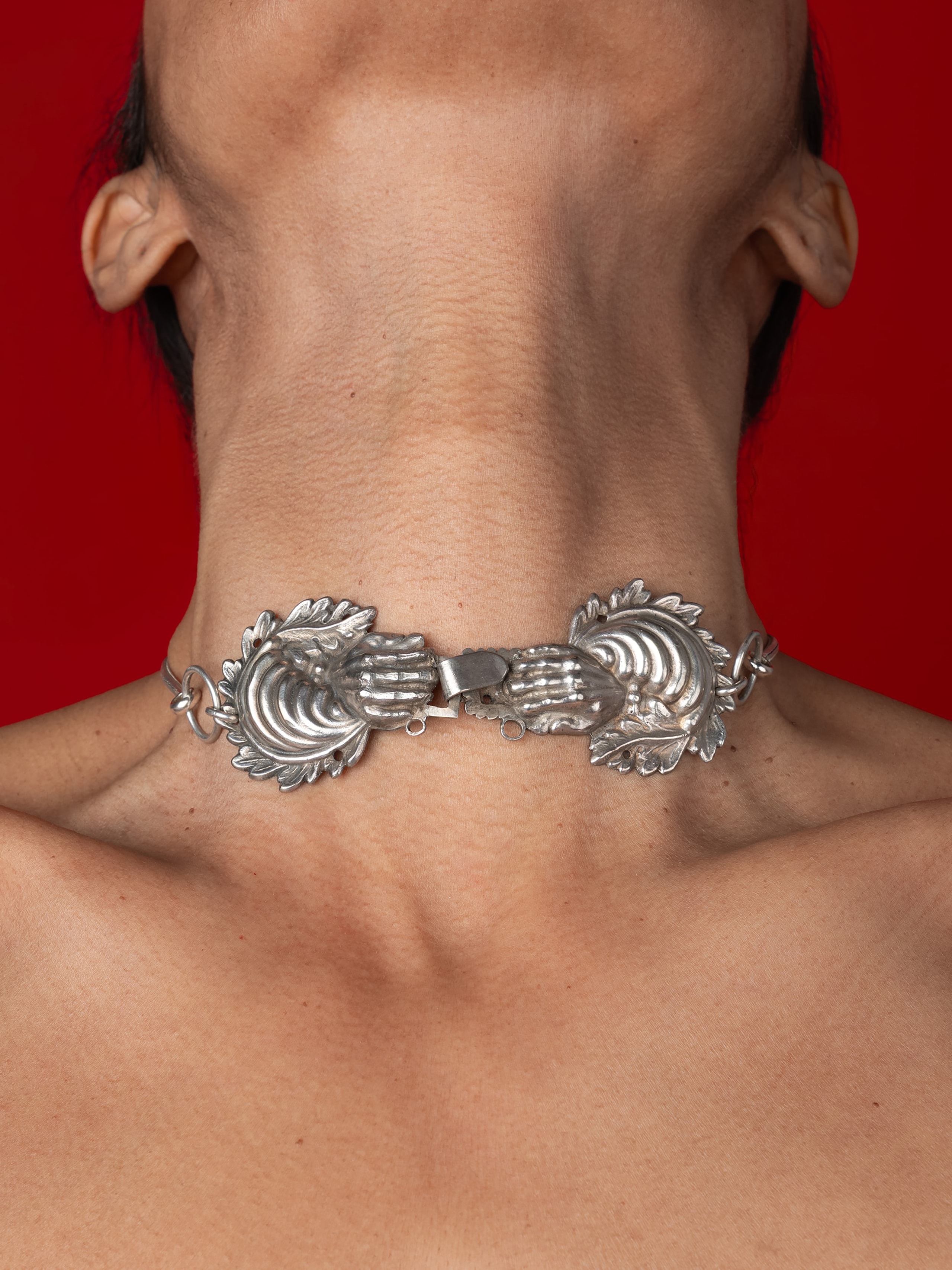
Carmen
Argent
Circa 19th century, Spain.
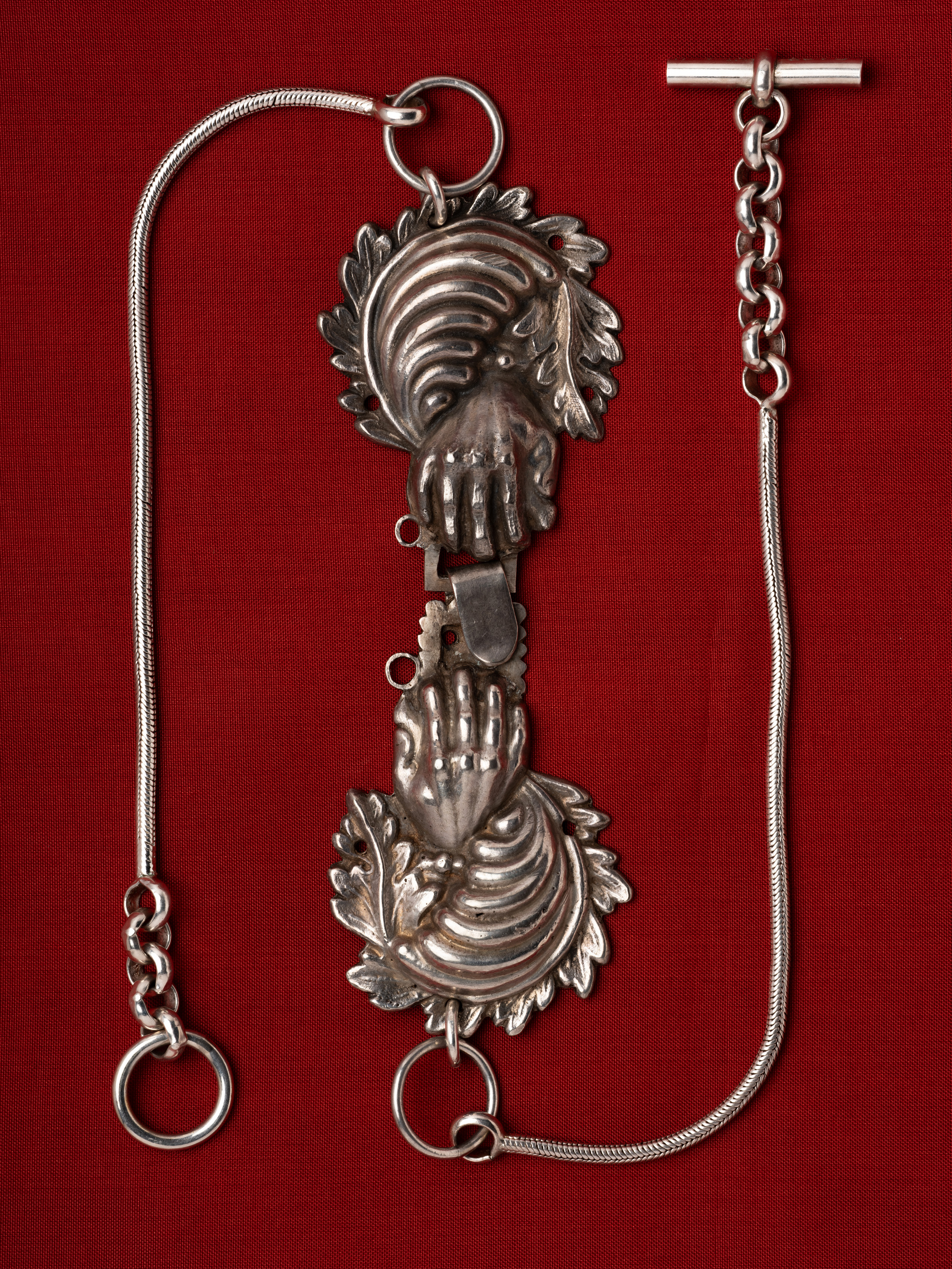
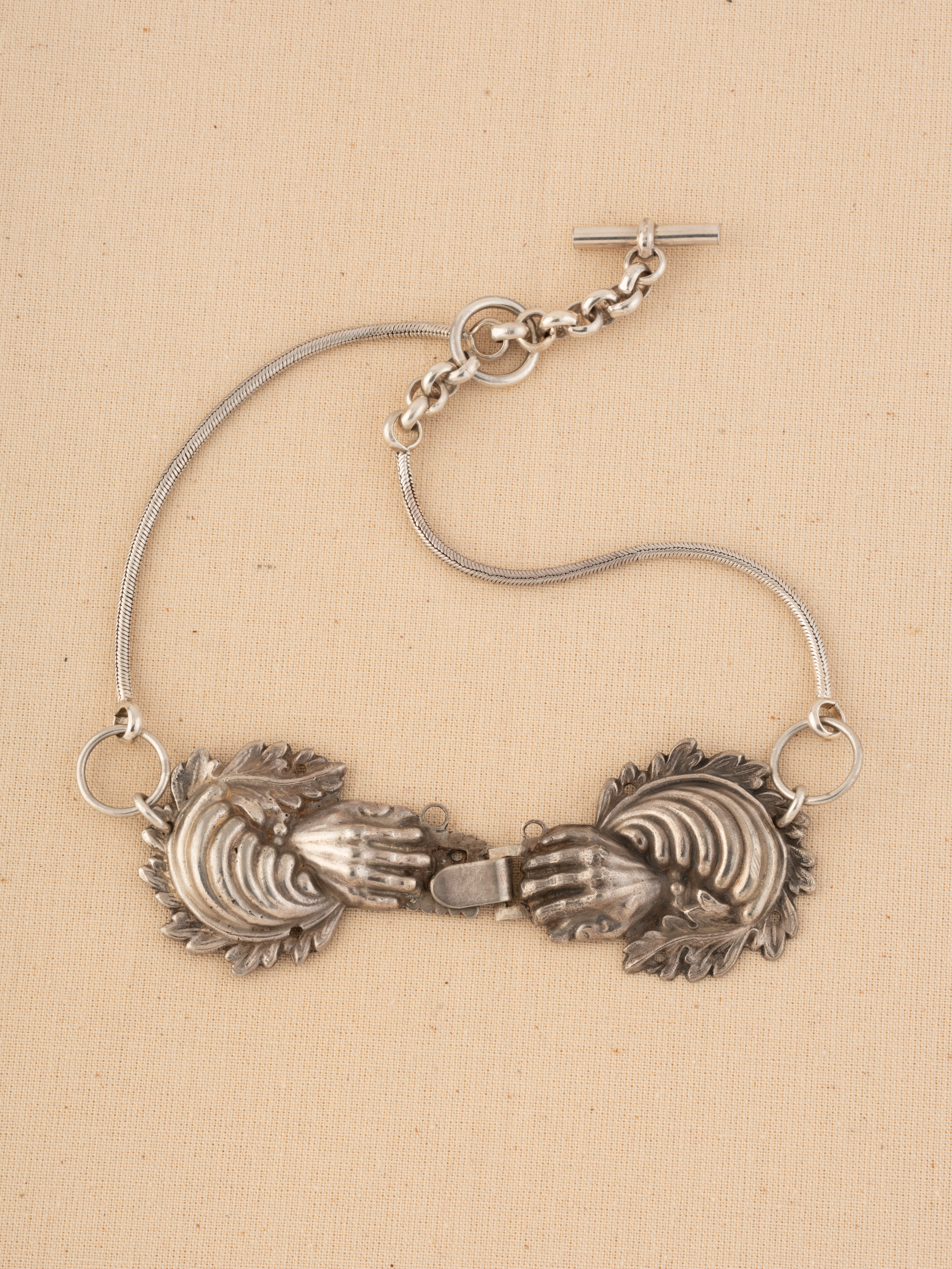
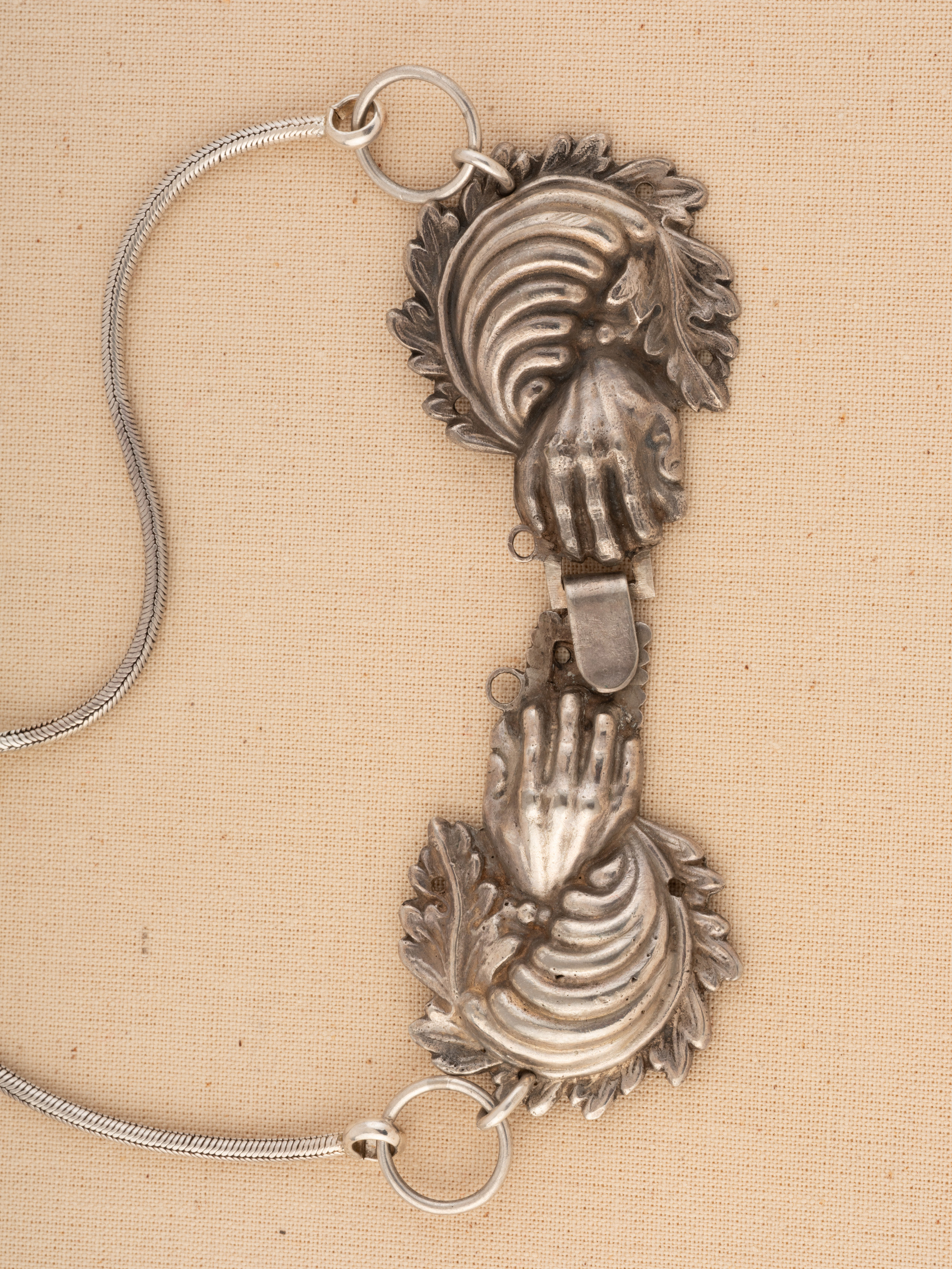
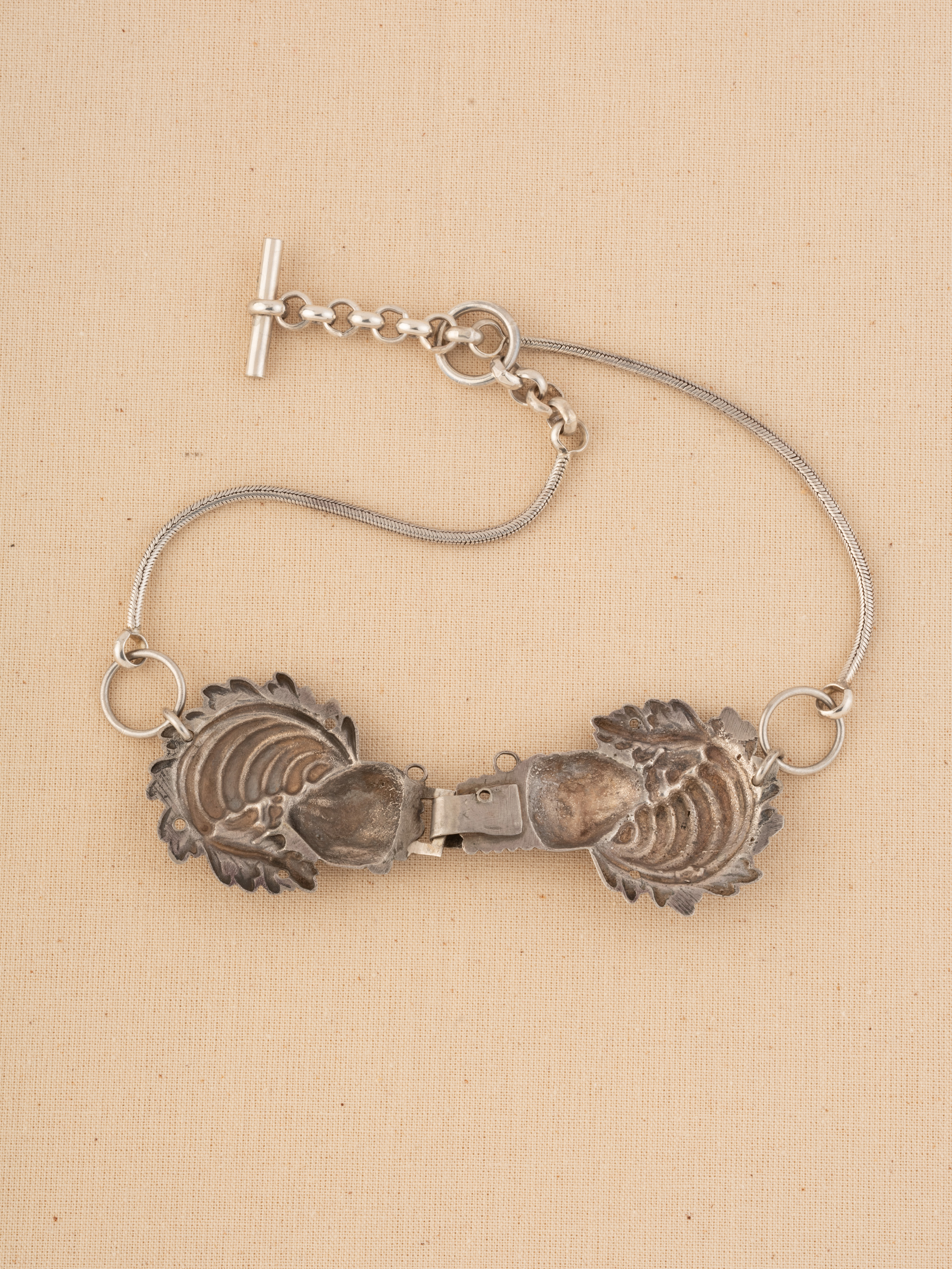
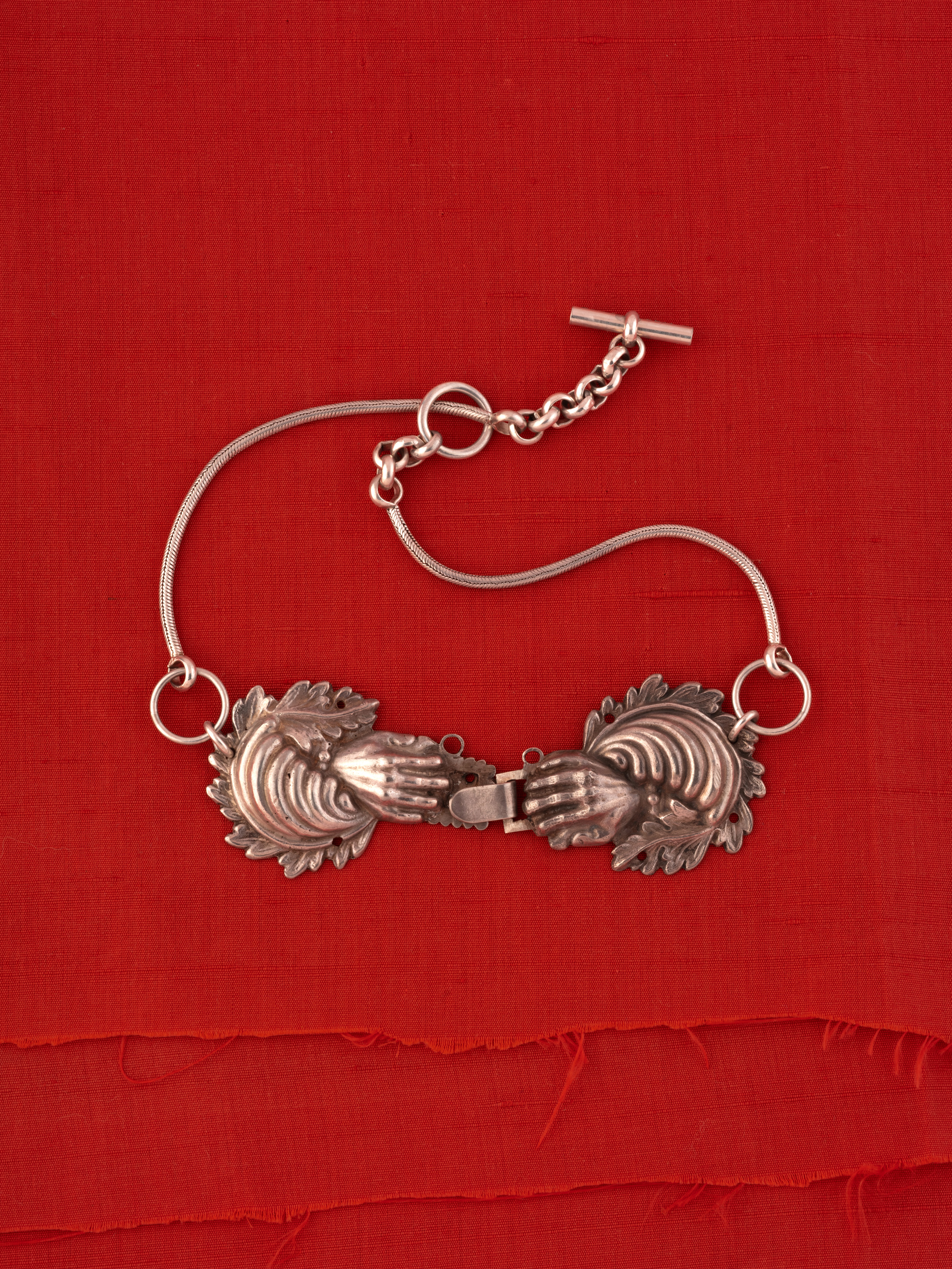
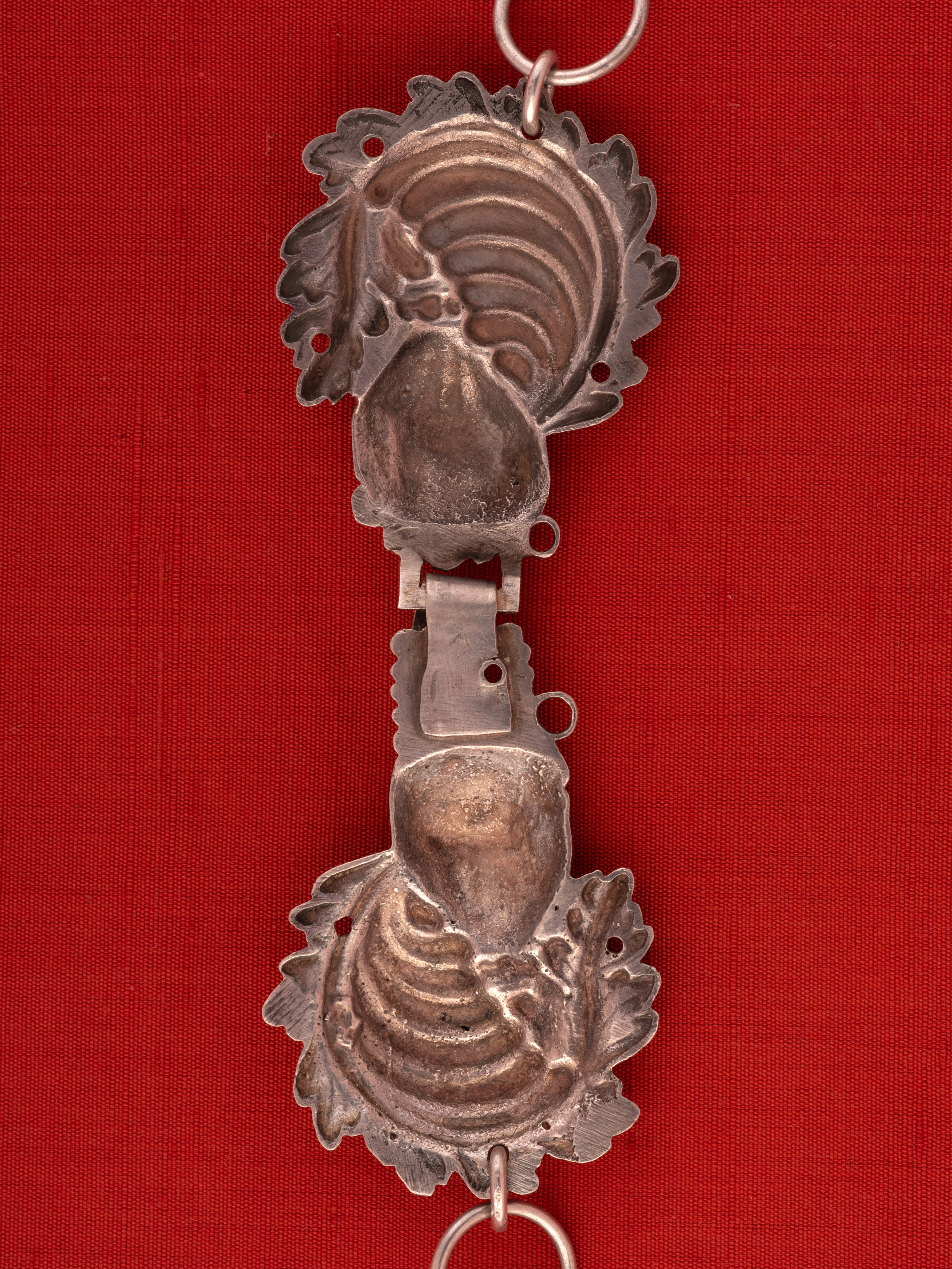
Two modern jaseron chains, articulated with rings and finished with a T-bar clasp.
Price
4000€
History
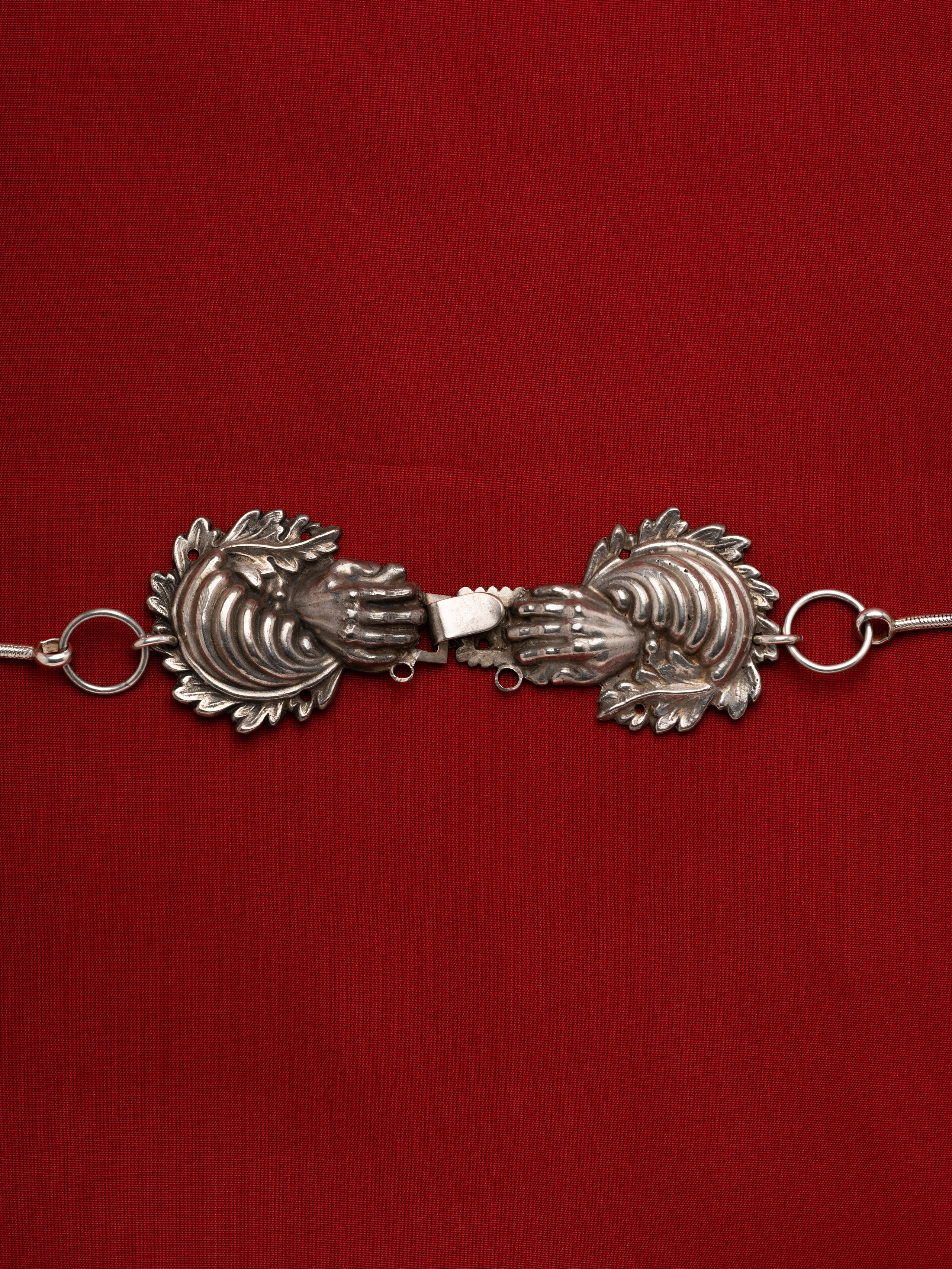
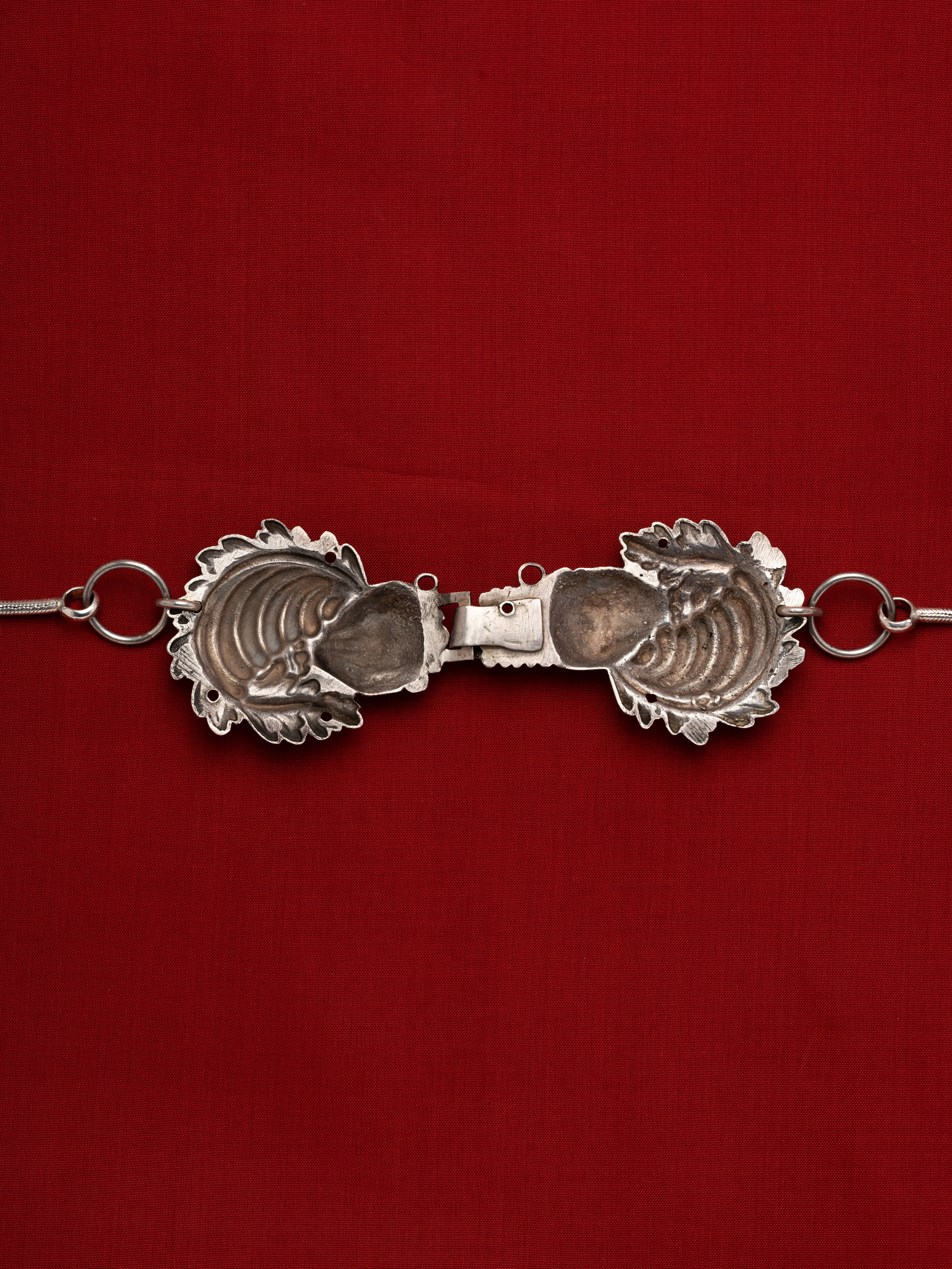
A Spanish cape clasp from the Romantic period, this necklace revives one of the most ancient motifs of union in the history of jewellery: the fede hands.
The form depicts two hands joined together. In the Renaissance, this motif was known as fede, from the Italian word meaning faith, fidelity, loyalty and trust. It refers to a precise gesture within matrimonial rites: the giving of the hand, when the representatives of the couple came together to seal the contractual agreement of the union.
This sign does not belong to love alone. It also belongs to the language of commitment, of the pledged word and of the pact. To shake hands is to agree; to hold hands is to express affection; to join two hands is to seal a bond.
Present since ancient Rome on rings used as wedding bands, the fede hands motif has crossed the centuries. While it appears on certain domestic objects, it is within jewellery that it finds its most enduring expression: rings, chains, earrings and brooches. Fede rings are thus considered among the earliest forms of the modern wedding band.
Transformed into a necklace, this cape clasp shifts the symbol without erasing it.
What once fastened the garment now rests upon the skin.
Carmen is a Love Jewel.
Reassurance
Independent authentication
Transformation by a specialised atelier
Unique piece
Transformation by a specialised atelier
Unique piece